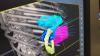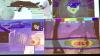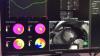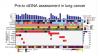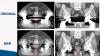
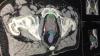
This is an example of the Mirada DLCExpert deep learning software that automatically identifies organs, segments and auto-contours them as the first step in creating radiation oncology treatment plans. This example of a segmented prostate computed tomography (CT) scan being used to plan radiotherapy was created without any human intervention. It was demonstrated at the American Association of Physicists in Medicine (AAPM) 2019 meeting.
This example shows OAR Space hydrogel (outlined in blue) injected to create space between the prostate and the rectum to prevent damage to that radiation sensitive structure. The gel is hard to identify on the CT scan because it looks like part of the rectum or prostate. But the softwares AI has been trained to identify it when present.
The DLCExpert software was cleared by the FDA in July 2018 and was first shown at ASTRO 2018. It automatically identifies anatomical structures and contours them to save staff time. The files created by the software are vendor neutral and can be imported into any vendor’s treatment planning system. Read more about this software.