

William Hall, M.D., radiation oncologist in the Department of Radiation Oncology at PeaceHealth St. Joseph Medical Center in Bellingham, Wash., discusses study results presented at theAmerican Society of Radiation Oncology (ASTRO) 2016. Video courtesy of Dr. Hall. You can read Dr. Hall's article on this topic, Breast Cancer Radiation Planning, here.
Videos
VIDEO: Advancements and New Technology in Diagnostic Radiology to Help in the Fight Against Cancer
Radiation Oncology | March 19, 2024
In the conclusion of this 3-part video series on recent advancements in diagnostic radiology, current editorial advisory board member Robert L. Bard, MD, PC, DABR, FASLMS, discusses other advancements in diagnostic radiology and what new technologies are in development that could help in the fight against cancer.
Watch VIDEO PART I: Using 3-D Doppler Imaging and Other Advancements in Diagnostic Radiology
Dr. Bard is internationally known and recognized as a leader in his field. He specializes in advanced 3-D Doppler imaging to detect cancers in numerous organs, including the breast, prostate, and other areas. His images are used to accurately guide biopsies, target therapy and provide focused follow-up after treatment. He is committed to improving non-invasive cancer testing and developing minimally invasive image guided technologies to prevent cancer spread.
Watch VIDEO PART 2: VIDEO: The Advantages of Using Power Doppler Sonography on the Prostate to Screen for Tumors
In the spring of 2020, the Ellis Island Honor Society officially recognized Dr. Bard for his life’s work in clinical and research contributions in diagnostic imaging detection of cancers, which he received in person during a May 2022 ceremony, the prestigious 35th Annual Ellis Island Medal of Honor. Dr. Bard is also an Editorial Advisory Board Member for Imaging Technology News.
Related content:
VIDEO: Using 3-D Doppler Imaging and Other Advancements in Diagnostic Radiology
VIDEO: The Advantages of Using Power Doppler Sonography on the Prostate to Screen for Tumors
One on One ... with Robert L. Bard, MD, PC, DABR, FASLMS
The Full Body Imaging Movement: A Strategic Upgrade of the MRI
Microcirculation and Electromagnetic Response to Inflammation
Radiation Oncology
Radiation Oncology | January 05, 2017
Join Chris Toth, president, Oncology Systems Americas, for a look at Varian’s new product introductions and major initiatives highlighted at ASTRO this year:
- The 360 Oncology care management platform, the first software system designed to integrate and coordinate integrates relevant health information so cancer patients and their care teams can collaborate on the best care. 360 Oncology brings together in a single platform, radiation, medical and surgical oncology, social services, primary care physicians, as well as the patient, to facilitate true collaborative and coordinated care.
- HyperArc high definition radiotherapy, technology that unlocks the potential of using highly non-coplanar treatment strategies to usher in a new era of precision. HyperArc is designed to automate and simplify sophisticated treatments such as stereotactic radiosurgery (SRS), and make them available to more cancer patients around the world.
- Varian’s cyber-security initiative, which is transforming the company’s software platforms to help maximize the security of patient information, maintain the integrity of treatment delivery, and enhance clinical uptime by helping defend against cyber-attacks.
Quality Assurance (QA) | December 20, 2016

Learn more about myQA, IBA’s unique platform that connects QA applications, people, and know-how through a central database and the Cloud. It offers full support throughout all of your QA, and enables you access to the different software modules and all of your data from one intuitive interface – anywhere and anytime.
Radiation Therapy | November 18, 2016

Accuray recently unveiled the company’s newest innovation, the Radixact Treatment Delivery System, a uniquely smart, fully integrated treatment delivery, treatment planning and data management system. Hear from the Accuray team about this new, next-generation TomoTherapy platform, as well as how recent innovations to the CyberKnife platform reduce treatment time while providing leading-edge motion tracking and real-time beam adjustment. Discover how Accuray systems can help clinicians deliver precise tumor treatments with confidence.
Radiation Oncology | October 07, 2016

Rachael Bennett, clinical analyst for MD Buyline, discusses trends in radiation oncology at ASTRO 2016.
Radiation Oncology | October 07, 2016
ASTRO Chairman of the Board David C. Beyer, MD, FASTRO, discusses the current trends in radiation oncology, key trends presented at this year's conference, and achieving value, and opportunities to improve value, in the treatment of prostate cancer.
Radiation Oncology | August 12, 2016
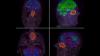
AAPM President Bruce Curran, MEng, FAAPM, FACMP, FACR, discusses the key topics at the 2016 meeting of the American Association of Physicists in Medicine. Topics included the advancement of radiomics in medical imaging for quantification for evidence-based clinical decision making in cancer, and improving how quality assurance is done in radiation therapy.
Radiation Therapy | December 21, 2015

Varian offered an overview of its new technology offerings at ASTRO 2015. These include advancements in analytics, treatment planning, adaptive therapy, clinical decision support and new tools for the integration of MRI and PET/CT into the treatment planning process.
Radiation Oncology | July 31, 2015
Joseph Deasy, Ph.D., discusses his study on dose-volume relations for late rectal bleeding in 1,001 patients from five prostate cancer cohorts with Imaging Technology News Editorial Director Melinda Taschetta-Millane.
Radiation Oncology | July 28, 2015

American Association of Physicists in Medicine (AAPM) President John Boone, Ph.D., discusses the impact of imaging in medical physics, as well as key topics addressed at this year’s meeting, with Imaging Technology News Editorial Director Melinda Taschetta-Millane.
Information Technology | October 20, 2014

From the floor at this year's annual meeting of the American Society for Radiation Oncology (ASTRO), Chris Toth, vice president of global marketing and Americas sales at Varian Medical Systems, talks about the latest Varian technologies and how they can help enhance knowledge sharing among oncology care professionals. In the constantly evolving healthcare landscape, learn why Varian is developing leading edge solutions designed to help clinicians leverage data to improve the quality and consistency of care. Varian is creating a knowledge-based network, enabling clinical partners to share information, ideas, and best practices. Toth explains how InSightive Analytics, Varian's latest in a line of recently released informatics products, helps clinics dive deep into existing data in order to achieve actionable insights. Being able to explore, visualize, and aggregate critical data using InSightive can help improve operations as well as clinical care.
Radiation Oncology | October 16, 2014

Suzanne Shankle, IBA product marketing specialist, explains how Dolphin helps provide better care and gives online control and confidence of treating patients safely.
Radiation Oncology | August 15, 2014
Kettering's oncolcogy services worked with Elekta to provide the latest radiation therapy with the Veras HD system.
Radiation Oncology | July 30, 2014

AAPM President John E. Bayouth, Ph.D., discusses the impact of imaging in medical physics, as well as training that is available through AAPM, with Imaging Technology News Editorial Director Melinda Taschetta-Millane.
Radiation Therapy | July 30, 2014

Paul Keall, Ph.D., FAAP, professor and NHMRC Australian Fellow at Radiation Physics Laboratory at the University of Sydney, Sydney Medical School, discusses radiosurgery beyond cancer. He explains how radiotherapy might be used to ablate cardiac tissue noninvasively, which could eliminate the need for the current invasive, catheter-based ablation therapies used in electrophysiology.
Radiation Oncology | July 30, 2014
Peter G. Maxim, Ph.D., assistant professor of radiation oncology at Stanford University, discusses stereotactic radiotherapy for renal sympathetic nerve ablation for the treatment of refractory hypertension, and some of the challenges involved, with Imaging Technology News Editorial Director Melinda Taschetta-Millane.
Radiation Therapy | July 01, 2014
Kettering Medical Center Therapist, Sarah Macke, describes how their center improved their treatment process with safety and efficiency by using the Elekta Versa HD system.
Radiation Oncology | August 13, 2013

AAPM President John Hazle, Ph.D., discusses trends in medical physics and major initiatives that the association is addressing in 2014 with Imaging Technology News Editorial Director Melinda Taschetta-Millane.
Radiation Oncology | December 07, 2012

Varian introduced the Edge radiosurgery Suite during ASTRO 2012. The system features real-time tumor tracking and a six-degree of freedom couch.
Treatment Planning | November 20, 2012
At ASTRO 2012, Ray Search Americas demonstrated the latest features for its radiation therapy treatment planning system.
Radiation Therapy | August 28, 2012

Dr. Gary Ezzell, president of the American Association of Physicists in Medicine (AAPM), talks about current trends in medical physics, particularly the melding of imaging and radiation therapy to guide treatment. He also recaps some of the hot topics discussed at this year's annual meeting in Charlotte, N.C., and AAPM's key initiatives for the coming year.
Radiation Therapy | October 18, 2011
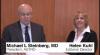
Michael L. Steinberg, M.D., incoming president of the American Society for Radiation Oncology (ASTRO), presents highlights of the 2011 annual meeting, including an overview of educational programs and scientific sessions held during the event. Presentations included study findings regarding IMRT versus other forms of radiation therapy treatment for prostate cancer, as well as a study regarding hypofractionation of prostate cancer to decrease treatment time. Steinberg also describes some of ASTRO's other activities and gives his thoughts about challenges facing the membership during the coming year.
For more information: www.astro.org
Proton Therapy | October 18, 2011

IBA ProteusONE offers uncompromised treatment solutions enabling physicians to leverage the clinical effectiveness of proton beam therapy. While Pencil Beam Scanning enables the delivery of Intensity Modulated Proton Therapy (IMPT) treatment plans, the latest imaging techniques make Image Guided Proton Therapy (IGPT) possible. ProteusONE has been inspired by everyday clinical practice. Its design enhances the patient experience by fostering a soothing environment while making the medical staff's daily practice safer and easier. Finally ProteusONE is IBA's response to making protons affordable. It is a proton therapy system that is smaller, more affordable, easier to install, easier to operate and ultimately easier to finance. With ProteusONE, protons are possible for more patients worldwide.
For more information: www.iba-worldwide.com
Radiation Therapy | August 15, 2011
IBA showcased its noninvasive radiation oncology treatment systems during the American Association of Physicists in Medicine (AAPM) 2011 annual meeting. This included its new Proteus One proton therapy system, advanced dose management and the addition of cone-beam computed tomography (CT) to help guide therapy.
For more information: www.IBA-protontherapy.com
AAPM | August 15, 2011

Tony Seibert, Ph.D., president of the American Association of Physicists in Medicine (AAPM), explained the key initiatives of the group during its 2011 annual meeting. These include:
• AAPM is working with its members to reduce patient radiation dose across radiology modalities.
• It is developing physics-based Web training modules for diagnostic radiology residents.
• Members are working to create residency programs for both radiation therapy and diagnostic radiologists.
• AAPM is also working with several states to create license certification programs to ensure who is a qualified medical physicist.
For more information: www.aapm.org
Proton Therapy | March 22, 2011

IBA introduced its new Proteus One proton treatment system during ASTRO 2010. It is about one-third the size of current proton treatment systems, taking up about the same amount of space as two linac rooms side-by-side. The Proteus One is designed to offer more patient access to proton therapy by making the treatment system easier to install. It is also designed to be used as a single treatment room installation, rather than sharing a larger cyclotron and beam with several treatment rooms. For more information: www.iba-worldwide.com
ASTRO | March 22, 2011
At ASTRO 2010, one of the big topics was how radiation oncology as a profession is in a period of retrenchment due to the economic crisis. There is also a growing demand from payors to show value for these treatments, said American Society for Radiation Oncology (ASTRO) President Anthony Zeitman, M.D., director, Harvard Radiation Oncology Residency Program, Jenot and William Shipley Professor of Radiation Oncology at Harvard Medical School. He said the radiotherapy technologies used need to undergo rigorous clinical testing to show what technologies and techniques work best and what is most cost-effective. Part of ASTRO's push is for a national registry to help advance this data collection.
AAPM | March 22, 2011

American Association of Physicists in Medicine (AAPM) President Mike Herman, Ph.D., radiation oncology medical physicist, Mayo Clinic, explains the role of the society and its goal to improve patient care. Activities include sharing the latest scientific research, developing best practices, education, setting guidelines for certification and the roles of various staff under mediacl physicists, and how physicists can better serve their hospitals. The main focus in sessions at the AAPM annual meeting include patient safety concerning radiation dose and how to lower these doses in practice. Herman said AAPM is also calling for a national patient safety event recording process to make it easier to see where there are mistakes so they can be addressed. The society is also Herman said the process needs to be easy to access and use. He spoke to ITN at the some 2010, 52nd annual AAPM meeting
© Copyright Wainscot Media. All Rights Reserved.

Subscribe Now