itnTV

VIDEO: One on One with Reed A. Omary, MD, MS, Vanderbilt University Medical Center

Radiology Business | July 30, 2024

Find actionable insights to achieve sustainability and savings in radiology in this newest of ITN’s “One on One” video series with Reed A. Omary, MD, MS, Vanderbilt University Medical Center (Nashville, TN). Tune in to "Promoting the Planet's Health: Sustainability in Radiology," to hear from a recognized leader about impactful, cost-saving initiatives radiologists, associations, healthcare systems and vendors can take, and why action is imperative.

Omary, the Carol D. and Henry P. Pendergrass Professor in the VUMC Department of Radiology, is a distinguished radiologist whose commitment to driving healthcare sustainability initiatives has gained both attention and momentum. After serving as Chair of the Department of Radiology and Radiology Sciences from 2012-2023, in June, 2023, Omary stepped away from his role as Chair to pursue a sabbatical focused on climate change and sustainable healthcare. He is author of The Green Leap, a blog about making healthcare sustainable, and founder of the Greenwell Project, a sustainable healthcare non-profit. He has presented a Plenary Lecture at the Radiological Society of North America (RSNA) Annual Scientific Sessions and American College of Radiology (ACR) meetings on the topic, and continues to connect with healthcare systems, vendors and colleagues to advance the issue.

Related content:

PHILIPS MARKS MILESTONE DURING HELIUM-FREE MRI INSTALLATION IN PUERTO RICO

RSNA 2022 PLENARY SPEAKER OMARY URGES RADIOLOGISTS TO SUPPORT PATIENTS, COMMUNITIES AND THE PLANET

RSNA 2022 PANEL DISCUSSIONS FORECAST RADIOLOGY IN 2027, AND HIGHLIGHT WHY MENTORS MATTER

Conference Coverage

Radiation Oncology | May 13, 2019

At ASTRO 2018, Accuray showcased new patient-first innovations, including motion synchronization on Radixact, and the new CK VoLO, a fast optimizer on the CyberKnife system. Andrew Delao, senior director of marketing for Accuray, highlights the new features.


Related content:

itnTV "Conversations": The Accuray Philosophy


Breast Imaging | April 18, 2019

In a keynote lecture at the Society of Breast Imaging (SBI)/American College of Radiology (ACR) 2019 Symposium, Diana Miglioretti, Ph.D., dean’s professor of biostatistics at UC Davis Health, discussed risk-stratified breast cancer screening and its potential to improve the balance of screening benefits to harms by tailoring screening intensity and modality to individual risk factors.

Read the article "How Risk Stratification Might Affect Women’s Health"

Read the article "FDA Proposes New Rules for Mammography Reporting and Quality Improvement"

Watch the VIDEO: A Discussion on Proposed FDA Rules for Mammography Reporting

Information Technology | April 17, 2019

With Intellispace Enterprise Edition as the foundation, Philips Healthcare is connecting facilities and service areas within enterprises, while developing standards-based interoperability that preserves customers' investments and best of breed systems. 

Artificial Intelligence | April 17, 2019

At the Society of Breast Imaging (SBI)/American College of Radiology (ACR) 2019 Symposium, Rasu Shrestha, M.D., MBA, chief strategy officer for Atrium Health, discusses his new role with Atrium, the hype cycle of artificial intelligence (AI) and the key elements of getting AI in radiology — and in healthcare — right.

Read the article "Atrium Health Debuts Amazon Alexa Skill to Help Patients Access Medical Care"

Listen to the podcast Is Artificial Intelligence The Doom of Radiology?, a discussion with Shrestha.

Mammography | April 15, 2019

Wendie Berg, M.D., Ph.D., FACR, chief scientific advisor to DenseBreast-info.org and professor of radiology at University of Pittsburgh School of Medicine/Magee-Women’s Hospital of UPMC, spoke with ITN Editorial Director Melinda Taschetta-Millane about some of the proposed amendments to the language being used for mammography reporting and quality improvement.

Read the article "FDA Proposes New Rules for Mammography Reporting and Quality Improvement"

Information Technology | April 15, 2019

Vital Images has developed a strategy that allows its customers to capture revenues that are otherwise missed while building the infrastructure for the future. In an interview with itnTV, Vital Images executives Larry Sitka and Geoffrey Clemmons describe how the company has reconciled this vision of the future with near-term realities.

Artificial Intelligence | April 12, 2019

Paul Chang, M.D., professor of radiology, vice chair of radiology informatics and medical director for enterprise imaging, University of Chicago, explains some of the issues with artificial intelligence (AI) and how hospitals can better prepare for its eventual implementation across the field of medicine. A key takeaway is that hospitals need an infrastructure and roadway for AI and deep-learning algorithms to operate. Chang said most health systems will not invest directly in AI, but will invest in analytics, which Chang said uses much of the same infrastructure required by AI.

Chang spoke on this topic at an AIMed breakfast briefing seminar in Chicago April 9, 2019. Listen to a webcast of this hour and 15 minute talk.


Radiology Business | March 26, 2019

William Pinsky, M.D., a pediatric cardiologist and CEO of the Educational Commission for Foreign Medical Graduates (ECFMG), and Mandeep Mehra, M.D., medical director of the Brigham and Women’s Hospital (BWH) Heart and Vascular Center and professor of medicine at Harvard Medical School, explain the U.S. doctor shortage and how foreign doctors help fill the gap.

According to 2017 data provided by the Association of American Medical Colleges (AAMC), 40 percent of interventional cardiologists, 30 percent of cardiovascular disease specialists, and 26 percent of pediatric cardiologists in the United States are international medical graduates (IMGs). However, as the physician shortage continues to impact primary care doctors, psychiatrists, OB/GYNs, among others, the U.S. also expects to see a shortage of cardiologists within the next 10 years, according to a spotlight cardiology study issued by the professional services firm PYA, which specialized in healthcare consulting.

The interview was shot at the American College of Cardiology (ACC) 2019 meeting.


Cardio-oncology | March 22, 2019

Magid Awadalla, MBBS, is an advanced cardiac imaging research fellow at Massachusetts General Hospital. He has been involved in an imaging study of cardiac changes from photon radiotherapy in breast cancer patients using serial cardiac magnetic resonance imaging (MRI). The radiotherapy beams used to treat breast cancer pass close to the neighboring heart, which can cause cardiac cell damage leading to issues like heart failure later on. He spoke on the topic of cardio-oncology at the American College of Cardiology (ACC) 2019 meeting.

Nuclear Imaging | March 22, 2019

Raza Alvi, M.D., a research fellow in radiology at Massachusetts General Hospital, has been involved in a study of a positron-emission tomography (PET) FDG radiotracer agent to image sarcoidosis. The inflammatory disease affects multiple organs and usually include abnormal masses or nodules (granulomas) consisting of inflamed tissues that can form in the heart. Alvi presented on this topic at American College of Cardiology (ACC) 2019 meeting


Related Cardiac Sarcoidosis Content:

ASNC and SNMMI Release Joint Document on Diagnosis, Treatment of Cardiac Sarcoidosis

New PET-CT Scan Improves Detection in Rare Cardiac Condition

25 Most Impactful Nuclear Cardiology Articles

Recent Advances in Cardiac Nuclear Imaging Technology

Enterprise Imaging | March 08, 2019

Mike Ciancio, imaging systems administrator at CarolinaEast Health System in North Carolina, explains how newer enterprising imaging software can improve how the backend administration of radiology PACS administration. He spoke at the 2019 Healthcare Information Management and Systems Society at (HIMSS) conference.

Ciancio said newer cloud-based systems allow for easier IT management of the backend of a PACS or enterprise imaging system.

Watch the related VIDEO: A Transformative Approach to Reducing Cost and Complexity at CarolinaEast Health System.

Look through a photo gallery of other new technologies at HIMSS19. 

Find news and videos from HIMSS 2019.

HIMSS | March 08, 2019

Karl Poterack, M.D., medical director, applied clinical informatics, Mayo Clinic, explains the role wearable devices will play in healthcare. He presented in several sessions at the 2019 Healthcare Information Management and Systems Society at (HIMSS) conference.

Poterack said there is a brewing tsunami of data in wearable technologies that healthcare systems will have to figure out how to integrate in the coming years. He said the key issue with wearable data is that there needs to be outcomes data showing the value of how many steps a patient accumulates, changes in heart rate over time, or blood pressure changes in patients with specific aliments. Without this , he said there is limited value in the information. 

Watch the related VIDEO: Use of Wearable Medical Devices for Cardiac Rehabilitation.

Look through a photo gallery of other new technologies at HIMSS19. 

Find news and videos from HIMSS 2019.

PACS | March 05, 2019

Cree Gaskin, M.D., professor, vice chair and associate chief medical officer, University of Virginia Health System, explains how new technology can be used to improve radiology reports without additional workload. His health system uses a new generation integrated RIS/PACS system that allows URL links and new graphical data presentations to be embedded into radiology reports to make them more interactive. This information can include quantifications, key images from the exam, access to full datasets, 3-D reconstructions and ability to immediately link to prior exams. He spoke is sessions on this topic at the 2019 Healthcare Information Management and Systems Society (HIMSS) conference.

Look through a photo gallery of other new technologies at HIMSS19. 

Find news and videos from HIMSS 2019.

Advanced Visualization | March 05, 2019

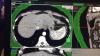
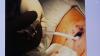
This is an example of a new endoscopic virtual peritoneal inflation tool on the patient's computed tomography (CT) imaging to aid in pre-procedural planning of endoscopic procedures. This is a new software feature on Fujifilm's Synapse 3D advanced visualization software released at the Healthcare Information Management and Systems Society (HIMSS) 2019 meeting. The software also enables 3-D imaging for surgical pre-procedural planning to assess the best entry points and angles. 

Look through a photo gallery of other new technologies at HIMSS19. 

Find news and videos from HIMSS 2019.

Orthopedic Imaging | March 05, 2019

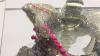
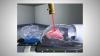
This is an example of a 3-D printed pelvis that had multiple hip fractures and a second printed pelvis is from a post surgical repair CT scan, showing the pins and plates in pink. This was on display at the GE Healthcare booth at the Healthcare Information Management and Systems Society (HIMSS) 2019 conference. The files for printing were created from the CT datasets using the AW Advanced Visualization software.

Look through a photo gallery of other new technologies at HIMSS19. 

Find news and videos from HIMSS 2019.


Information Technology | February 28, 2019

Andrew Deutsch, M.D., MBA, chairman and CEO of Renaissance Imaging Medical Associates (RIMA), an affiliate of Radiology Partners, describes RIMA’s use of an artificial intelligence (AI) based worklist workflow to manage reads across 70 sites and load balance between 120 radiologists. He spoke in sessions on this topic at the 2019 Healthcare Information Management and Systems Society at (HIMSS) conference.  

Deutsch, a nationally respected expert in skeletal radiology and magnetic resonance imaging (MRI) and in addition to his roles at RIMA, serves as medical director of the imaging departments at Northridge Hospital Medical Center and Valley Presbyterian Hospital.

Look through a photo gallery of other new technologies at HIMSS19. 

Find other news and video from HIMSS 2019. 


Related AI Coverage:

VIDEO: Editor’s Choice of the Most Innovative New Artificial Intelligence Technologies at RSNA 2018

VIDEO: Technology Report: Artificial Intelligence

How to Market Healthcare Artificial Intelligence Software

Selecting an AI Marketplace for Radiology: Key Considerations for Healthcare Providers

Cardiac Imaging | February 27, 2019

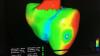
This is a virtual heart with the same electrophysiology characteristics as the real patient unveiled by Siemens at the Healthcare Information Management and Systems Society (HIMSS) 2019 annual meeting in February. This "digital twin" technology is in development and will be able to create virtual, digital organs from a patient’s medical imnaging and other physiological data. In this case, the model was created using an ECG, MRI scan and other clinical data. It was shown as a way to help optimize cardiac resynchronization therapy (CRT) lead placement. CRT currently has a 30 percent nonresponder rate, which is mainly due to the placement of leads. This model allows virtual placement of the leads In various locations to test response prior to the implantation procedure. The green dot shows the location of the virtual lead. Siemens said the technology also might have applications for testing virtual ablations strategies to save procedure time when the patient is in the EP lab

Read more about the digital twin technology.

Look through a photo gallery of other new technologies at HIMSS19. 

Find news and videos from HIMSS 2019.


Enterprise Imaging | February 27, 2019

Steve Holloway, principal analyst and company director for the healthcare market research firm Signify Research, explains the key trends he is seeing in radiology enterprise imaging systems. He spoke to ITN at the 2019 Healthcare Information Management and Systems Society at (HIMSS) conference.  

Additional HIMSS 2019 coverage.

Watch the RSNA 2018 VIDEO: Technology Report — Enterprise Imaging

Artificial Intelligence | February 05, 2019

ITN Contributing Editor Greg Freiherr discusses Fujifilm's AI-enabled Platform REiLI, the benefits of an open AI platform, and how this impacts radiologists' workflow and patient outcomes with FUJIFILM Medical Systems U.S.A., Inc. Vice President of Medical Informatics, Bill Lacy. 

Missed your chance for a REiLI demo at RSNA?  Visit Fujifilm's booth #4159 at HIMSS February 12–14, 2019. 

Related content:

Fujifilm Collaborates With Lunit on AI Pilot Project

RSNA 2018 Sunday – Improving, Not Replacing

Radiation Therapy | January 18, 2019
Join Chris Toth, president of Varian’s Oncology Systems business, for a look at product introductions for 2018 plus a peek at the company’s roadmap for the future. Chris highlights:
 

  • Varian’s new Bravos afterloader system for high-dose-rate (HDR) brachytherapy;
  • Varian’s new ProBeam 360 single-room proton therapy system, with its lower-cost, 30 percent smaller footprint;
  • The company’s vision of — and development work towards — an artificial intelligence-powered multimodality adaptive radiotherapy suite; and
  • Pre-clinical research into ultra-high-dose-rate cancer treatment with protons.
Radiation Therapy | December 06, 2018

Radiation therapy has become increasingly effective and safe as vendors continue to innovate technologies that benefit the patient. At ASTRO 2018, this patient-centric approach was exemplified and demonstrated not only in ways that match treatments to patients, but in how technologies can adjust to patient movement and anatomical changes, and to increase the precision of treatments. ITN Contributing Editor Greg Freiherr showcases several new technologies that are helping to advance this field.

For additional patient-centered care coverage, see:

Conversations with Greg Freiherr: The Accuray Philosophy

ASTRO Puts Patients First

Radiation Oncology | November 30, 2018

Accuray's philosophy is to personalize treatments to exactly fit the patient. Senior Director of Marketing Andrew Delao explains this philosophy in a conversation with Greg Freiherr at ASTRO 2018.

ASTRO | November 08, 2018

ITN Editor Dave Fornell took a tour of some of the most innovative technologies on display on the expo floor at the American Society for Radiation Oncology (ASTRO) 2018 conference. The overview includes new technologies for proton therapy, MRI-guded radiation therapy, PET-guided radiotherapy, brachytherapy, SRS quality assurance, 3-D printing and mobile connectivity to the oncology information system.

Find links to all the ASTRO 2018 latebreakers, key news and VIDEOS in the article "Late-breaking Radiation Therapy Clinical Trials at ASTRO 2018."
 

Brachytherapy Systems, Women's Healthcare | November 07, 2018

An interview with A. M. Niser Syed, M.D., medical director, radiation oncology and endocurietherapy, MemorialCare Cancer Institute, Long Beach, Calif. At the American Society for Radiotherapy and Oncology (ASTRO) 2018 annual meeting, he presented a study of 1,200 patients using a single session of intra-operative radiation therapy (IORT) using the Xoft X-ray emitting brachytherapy system. 

Radiation Oncology | November 07, 2018

Aadel Chaudhuri, M.D., assistant professor of radiation oncology, Washington University, St. Louis, Mo., explains his research on using blood tests to collect circulating lung tumor cells to assess their response to radiotherapy. This use of liquid biopsies can eliminate the need for invasive needle biopsies. He spoke on this topic at the American Society for Radiotherapy and Oncology (ASTRO) 2018 annual meeting. 


Radiation Oncology | November 06, 2018

Genomics can be used to assess a patient's radiosensitivity, which can be used to increase or decrease the radiation that needs to be delivered to treat the tumor and spare surrounding healthy tissue. Javier Torres-Roca, M.D., associate professor of radiation oncology, Moffit Cancer Center, and co-founder of the genomics company Cvergenx, spoke on this topic at the ASTRO 2018 conference

Find more news, videos and late-breating studies from ASTRO 2018.


Radiation Therapy | October 30, 2018

James Welsh, M.D., associate professor, radiation oncology, MD Anderson Cancer Center, Houston, explains how targeted nanoparticles can be used to precondition tumors to improve response to radiation therapy. He spoke on this topic at the ASTRO 2018 meeting.


Proton Therapy | October 30, 2018

Interview with Peyman Kabolizadeh, M.D., the medical director of Beaumont Proton Therapy Center, Royal Oak, Mich. He explains how proton therapy fits into Beaumont's overall strategy of cancer treatment. He also explains Beaumont's development of proton arc therapy that is in development. He spoke on these topics at that ASTRO 2018 meeting.

Read the article "Beaumont Hospital Cancer Institute Performs First Irradiation of Spot Scanning Proton Arc Therapy Plan."


ASTRO | October 29, 2018

Anne Hubbard, MBA, director of health policy for the American Society for Radiation Oncology (ASTRO), gives an update on where things are at for radiotherapy reimbursement, CMS conversion factors and MACRA. She spoke on this topic at the 2018 ASTRO conference.

Read the related article "ASTRO: CMS Report on Radiation Therapy Payment Model Charts Path to Value-Based Cancer Care."

October 29, 2018

Kristin Higgins, M.D., medical director of radiation oncology at the Emory Clinic at the Winship Cancer Institute, and associate professor, Department of Radiation Oncology, Emory University School of Medicine, explains how the use of a novel positron-emission tomography, computed tomography (PET-CT) system combined with a linac in a single gantry might offer a new approach to real-time adaptive therapy. She spoke to ITN at the 2018 ASTRO conference.

Read the article about the technology displayed at ASTRO 2018 — Biology Guided Radiotherapy May Improve Physician Confidence in Treatment of Multiple Tumors

Read more about the start-up company that created the system.


Radiation Therapy | October 29, 2018

Elizabeth Chabner-Thompson, M.D., MPH, radiation oncologist, Northern Westchester Hospital, Northwell Health, Mt. Kisco, N.Y., and CEO of Masthead, explains an FDA-cleared bra she designed for improved patient positioning of women undergoing radiation therapy. She spoke to ITN at the 2018 ASTRO conference


Treatment Planning | September 27, 2018

Eric Morris, a Ph.D. candidate at Henry Ford Hospital and Wayne State University, explains his project to automate registration and segmentation of cardiac structures in treatment planning scans for breast cancer radiation therapy.

Find more content on Henry Ford Hospital

Radiation Therapy | September 07, 2018

A discussion with Ehsan Samei, Ph.D., DABR, FAAPM, FSPIE, director of the Duke University Clinical Imaging Physics Group and head of the Duke medical physics graduate program. He spoke on this topic at the American Association of Physicists in Medicine (AAPM) 2018 meeting.

Treatment Planning | August 28, 2018

A discussion with Kevin Moore, Ph.D., DABR, deputy director of medical physics and associate professor, University of California San Diego, about his daily clinical use of an artificial intelligence treatment planning software. He spoke on this at the American Association of Physicists in Medicine (AAPM) 2018 meeting.

Also watch the VIDEO: The Impact of Artificial Intelligence on Radiation Therapy — an interview with Steve Jiang, Ph.D.

Find other videos and coverage from AAPM 2018

Artificial Intelligence | August 23, 2018

Radiological Society of North America (RSNA) President Vijay Rao, M.D., the David C. Levin professor and chair of radiology, Sidney Kimmel Medical College of Thomas Jefferson University, Philadelphia, spoke to ITN at the 2018 AAPM meeting. She said artificial intelligence is by far the most impactful new technology in radiology and it will be by far be one of the hottest topics at the 2018 RSNA annual meeting.


Radiation Therapy | August 13, 2018

ITN Editor Dave Fornell takes a tour of some of the innovative new technologies on the expo floor at the 2018 American Association of Physicists in Medicine (AAPM) meeting.

Click here for more coverage of the 2018 AAPM annual meeting.

Radiation Therapy | August 13, 2018

A discussion with Mahadevappa Mahesh, Ph.D., FAAPM, FACR, FACMP, FSCCT, professor of radiology and cardiology and chief physicist at Johns Hopkins, Baltimore. He also serves as treasurer for the American Association of Physicists in Medicine (AAPM) and spoke to ITN at the 2018 meeting.

Watch the VIDEO Radiation Dose Monitoring in Medical Imaging, an interview with Mahesh at the 2016 Radiological Society of North America (RSNA) annual meeting.
 

Proton Therapy | August 10, 2018

A discussion with Matthew Freeman, Ph.D., scientist at Los Alamos National Laboratory, New Mexico. He spoke about his research using direct proton imaging on the treatment table without the need for other external or on-board imaging systems. He spoke at the 2018 American Association of Physicists in Medicine (AAPM) meeting.

Radiomics | August 09, 2018

A discussion with Martin Vallieres, Ph.D., post-doctoral fellow at McGill University, Montreal, Canada. He spoke on this topic in sessions at the American Association of Physicists in Medicine (AAPM) 2018 meeting. He explains radiomics and how it can be used in both medical imaging and radiation therapy. 

Read the related article "Hidden Information Behind Imaging Tests for Cancer May Unlock New Approaches to Radiation Therapy."

Read the related article "Computer Program Beats Physicians at Brain Cancer Diagnoses."

For other AAPM 2018 videos and coverage

Subscribe Now