
From the floor at this year's annual meeting of the American Society for Radiation Oncology (ASTRO), Chris Toth, vice president of global marketing and Americas sales at Varian Medical Systems, talks about the latest Varian technologies and how they can help enhance knowledge sharing among oncology care professionals. In the constantly evolving healthcare landscape, learn why Varian is developing leading edge solutions designed to help clinicians leverage data to improve the quality and consistency of care. Varian is creating a knowledge-based network, enabling clinical partners to share information, ideas, and best practices. Toth explains how InSightive Analytics, Varian's latest in a line of recently released informatics products, helps clinics dive deep into existing data in order to achieve actionable insights. Being able to explore, visualize, and aggregate critical data using InSightive can help improve operations as well as clinical care.
itnTV
VIDEO: One on One with Reed A. Omary, MD, MS, Vanderbilt University Medical Center
Find actionable insights to achieve sustainability and savings in radiology in this newest of ITN’s “One on One” video series with Reed A. Omary, MD, MS, Vanderbilt University Medical Center (Nashville, TN). Tune in to "Promoting the Planet's Health: Sustainability in Radiology," to hear from a recognized leader about impactful, cost-saving initiatives radiologists, associations, healthcare systems and vendors can take, and why action is imperative.
Omary, the Carol D. and Henry P. Pendergrass Professor in the VUMC Department of Radiology, is a distinguished radiologist whose commitment to driving healthcare sustainability initiatives has gained both attention and momentum. After serving as Chair of the Department of Radiology and Radiology Sciences from 2012-2023, in June, 2023, Omary stepped away from his role as Chair to pursue a sabbatical focused on climate change and sustainable healthcare. He is author of The Green Leap, a blog about making healthcare sustainable, and founder of the Greenwell Project, a sustainable healthcare non-profit. He has presented a Plenary Lecture at the Radiological Society of North America (RSNA) Annual Scientific Sessions and American College of Radiology (ACR) meetings on the topic, and continues to connect with healthcare systems, vendors and colleagues to advance the issue.
Related content:
PHILIPS MARKS MILESTONE DURING HELIUM-FREE MRI INSTALLATION IN PUERTO RICO
RSNA 2022 PLENARY SPEAKER OMARY URGES RADIOLOGISTS TO SUPPORT PATIENTS, COMMUNITIES AND THE PLANET
RSNA 2022 PANEL DISCUSSIONS FORECAST RADIOLOGY IN 2027, AND HIGHLIGHT WHY MENTORS MATTER
Conference Coverage
Siemens introduces True volume TEE transducer. This 3-D/4-D 90°x90° TEE solution enables clinically meaningful visualization of anatomy, volume color Doppler and function in one volume view, without compromises like stitching. Combined with eSieValves advanced analysis package, it offers automated modeling and quantification in seconds allowing cardiologists to remove the guesswork from valve sizing.
Suzanne Shankle, IBA product marketing specialist, explains how Dolphin helps provide better care and gives online control and confidence of treating patients safely.

Introducing HYPERSCAN , Pencil Beam Scanning Delivery HYPERSCAN enables tumor volumes to be scanned in a matter of seconds, benefiting from the MEVION S250's direct and efficient beam generation. The result is a fast Pencil Beam Scanning enabling robust Intensity Modulated Proton Therapy treatment delivery that is much less sensitive to patient and tumor motions, ultimately increasing the efficacy of the treatment procedure. The MEVION S250 proton therapy platform with HYPERSCAN allows you to treat with precision, accuracy and reproducibility at unparalleled speed with uncompromised beam quality. Designed for greater access by any size cancer care facility, the MEVION S250 significantly reduces the complexity, size, and cost associated with conventional proton therapy systems. The MEVION S250 is specifically engineered as upgrade-ready to continue providing the most advanced proton therapy treatment available today as well as tomorrow. Key Features : Field-Upgradeable; Streamlined Clinical Workflow with Full OIS Integration; High-Accuracy Beam Pointing with Submillimeter Position Tracking; Fast Volumetric and Layer Rescanning Capabilities; Supports Standard Gating Interface for Beam On/Off Hold

John Stevens, chairman and CEO of HeartFlow, explains his company's computed tomography (CT)-based fractional flow reserve (FFR) assessment technology, which may eliminate the need for catheter-based FFR measurements.
Kettering's oncolcogy services worked with Elekta to provide the latest radiation therapy with the Veras HD system.

AAPM President John E. Bayouth, Ph.D., discusses the impact of imaging in medical physics, as well as training that is available through AAPM, with Imaging Technology News Editorial Director Melinda Taschetta-Millane.
Paul Keall, Ph.D., FAAP, professor and NHMRC Australian Fellow at Radiation Physics Laboratory at the University of Sydney, Sydney Medical School, discusses radiosurgery beyond cancer. He explains how radiotherapy might be used to ablate cardiac tissue noninvasively, which could eliminate the need for the current invasive, catheter-based ablation therapies used in electrophysiology.
Peter G. Maxim, Ph.D., assistant professor of radiation oncology at Stanford University, discusses stereotactic radiotherapy for renal sympathetic nerve ablation for the treatment of refractory hypertension, and some of the challenges involved, with Imaging Technology News Editorial Director Melinda Taschetta-Millane.


The Aplio 500 CV is the system of choice for all premium 2-D cardiac exams. Featuring Toshiba's 2-D Wall Motion Tracking technology, the system provides stunning visualization and quantitative analysis of myocardial wall motion with unrivaled accuracy and reproducibility. With on-board cardiac quantification measurements in all directions (radial, circumferential, 2D rotation and longitudinal), the Aplio500 CV system is designed to get the most comprehensive information anytime and anywhere in the hospital, right at the patient's bedside. Additional cardiac-specific technologies include Tissue Enhancement, Advanced Dynamic Flow, Lateral Gain Controls, Tissue Doppler, Stress Echo, Flex-M Mode and Auto IMT. The system is easy to use, with superior ergonomics and a smaller footprint, making it easier to maneuver for greater patient access and improved workflow. For more information: http://medical.toshiba.com/products/ul/cardiovascular/index.php
Dome by NDSSI displayed its newest product releases at the Health Information Management Systems Society (HIMSS) 2014 annual meeting. These included the S6C diagnostic monitor, S10 grayscale mammography display, dual-screen SC3 color diagnostic display and the Dome Dashboard software for remote monitoring of Dome displays.
DAIC Editor Dave Fornell highlights his choices for some of the most innovative new technology at the American Society of Echocardiography (ASE) 2014 meeting.

DAIC Editor Dave Fornell shares his choices for the most innovative new technologies in nuclear imaging that were on display at the 2014 Society of Nuclear Medicine and Molecular Imaging (SNMMI) annual meeting.

Satoshi Minoshima, M.D., Ph.D., chairman of the Society of Nuclear Medicine and Molecular Imaging Scientific Committee, discusses the new technologies and trends at SNMMI 2014.

Eliot Siegel, M.D., professor and vice chairman of radiology at the University of Maryland, School of Medicine, department of radiology, discusses the big data trend, and what it means to personalized medicine as well as precision medicine.

Raym Geis, M.D., SIIM chair, spoke about how SIIM is changing its focus away from radiology and more toward informatics of all medical images. Now that every modality is starting to de-silo images, what are the next steps toward standardization?
Donald Dennison, SIIM Board of Directors and Hackathon organizer, discusses this inaugural event at the Society for Imaging Informatics in Medicine (SIIM) 2014 annual meeting in Long Beach, Calif.
Gary Levine, M.D., president of the National Consortium of Breast Centers, reacts to the recent Canadian study's questioning the value of preventative mammography screening and the confusion it has caused.
Gary Levine, M.D., president of the National Consortium of Breast Centers, discusses breast density, alternative screening technologies and the impact of "Inform Law" on clinical workflow.

Nancy Cappello, Ph.D., founder/director of Are You Dense, Inc., discusses breast density, Inform Laws and her mission to expand screening options for women.

Gary Levine, M.D., president of the National Consortium of Breast Centers, discusses highlights of the NCoBC conference and NCBC's mission for 2014.
A big trend in healthcare IT at Healthcare Information and Management Systems Society (HIMSS) 2014 annual meeting was the creation of enterprise-wide image access systems. With the introduction of vendor neutral archives (VNAs), enterprise imaging will increasingly be taken out of the hands of radiology and move to the responsibility of hospital IT directors. In this form, radiology may become just another department contributing images to the VNA. HIMSS also highlighted the proliferation of new, inexpensive home use patient monitors.

Varian Medical Systems celebrates its 65-year anniversary, focused around innovation, partnership, collaboration and service. As it looks to the next 65 years, the company's vision is focused on a world without fear of cancer. Varian's goal is to work closely with the clinical community to help remove fear, provide better tools and also software solutions that will improve care over time. At ASTRO 2013, Varian highlighted what is new this year: The first installations of the Edge Radiosurgery Suite CT on Rails solution for brachytherapy, in partnership with Siemens' Aria and Eclipse Version 11, with over 500 installations to date; Connectivity to Siemens accelerators currently in the process of regulatory filing; Launch of RapidPlan Knowledge-based planning system
Varian Medical Systems launched RapidPlan Knowledge-based Planning at ASTRO 2013. RapidPlan is a new paradigm for treatment planning that will change the way planning is done by helping facilities capture actual clinical practices based on treatment plans that have been done in the past. RapidPlan will help busy clinics increase efficiency overall for the treatment planning process. For clinics new to the technology, models from other clinics can be used, applying past learning experiences to their own model. And with academic medical centers, RapidPlan is a great tool for narrowing the variations between the different clinicians within the practice itself.

IBA Dosimetry's Compass 3.0 is a unique two-in-one solution that allows the user to do both calculations and measurements.
AAPM President John Hazle, Ph.D., discusses trends in medical physics and major initiatives that the association is addressing in 2014 with Imaging Technology News Editorial Director Melinda Taschetta-Millane.
DAIC Editor Dave Fornell highlights some of the biggest trends and most innovative technology discussed during the American Society of Echocardiology (ASE) 2013 annual meeting.

Peter Herscovitch, M.D., SNMMI president-elect, explains the advances in molecular imaging for Alzheimer's disease and Parkinsonian syndromes during the Society of Nuclear Medicine and Molecular Imaging (SNMMI) 2013 meeting in Vancouver, Canada. While new agents allow imaging of these disease states, reimbursement and treatment decisions sometimes limit their use.
Gary Dillehay, M.D., FACR, FACNM, SNMMI president, explains some of the trends in Nuclear Imaging at the Society of Nuclear Medicine and Molecular Imaging (SNMMI) 2013 annual meeting in Vancouver, Canada.
Agfa Healthcare introduced new functionality and workflow improvements for its completely revised cardiovascular information system (CVIS), introduced at the American College of Cardiology 2013 meeting. The CV12 system offers new solutions for echocardiography, nuclear perfusion imaging, cath lab reporting and ECG management and reporting. For more information, visit www.agfahealthcare.com
McKesson highlighted enhancements to its cardiovascular information system (CVIS) version 13. The system offers new modules for electrophysiology, inventory control and aids interoperability for better change capture and data mining. For more information, visit www.allaboutCVIS.com
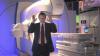
Varian introduced the Edge radiosurgery Suite during ASTRO 2012. The system features real-time tumor tracking and a six-degree of freedom couch.

At ASTRO 2012, IBA featured a scale model install of its Proteus One compact proton system combined with the Philips Ambient Experience, designed to count patients through lighting visual effects.
At ASTRO 2012, Ray Search Americas demonstrated the latest features for its radiation therapy treatment planning system.
At ASTRO 2012, Mevion featured its compact Mevion S250 Proton Therapy System, which has a footprint comparable to traditional radiation therapy systems.

Dr. Gary Ezzell, president of the American Association of Physicists in Medicine (AAPM), talks about current trends in medical physics, particularly the melding of imaging and radiation therapy to guide treatment. He also recaps some of the hot topics discussed at this year's annual meeting in Charlotte, N.C., and AAPM's key initiatives for the coming year.

Web Stayman, Ph.D., Johns Hopkins University, presents an overview of research he presented at the 2012 American Association of Physicists in Medicine (AAPM) annual meeting in Charlotte, N.C. It involves an iterative technique for computed tomography (CT) to better contend with implants to improve image-guided surgery or interventions. The technique takes knowledge about the components and integrates it into the reconstruction to eliminate artifacts.
Dr. Sabee Molloi from the School of Medicine at the University of California, Irvine, worked with a team on a study using spectral mammography to develop a quantitative technique to measure volumetric breast density. Their technique also enables a lower dose to be used for a screening mammogram. Two members of the team, Justin Ducote and Huanjun Ding, describe the research, which they presented at the 2012 annual meeting of the American Association of Physicists in Medicine.

IBA Dosimetry offers commissioning services for linear accelerators (linacs), using state-of-the-art equipment like the Blue Phantom and the linear diode array. A variety of service options are available, from a turnkey operation to segmented individual services or post-installation support, depending on the customer's needs. Utilizing these services can help a clinic get up-and-running in the quickest time possible. Customers also can utilize IBA's new International Competence Center (ICC) to receive training to do commissioning on their own. For more information, visit www.iba-dosimetry.com
